As someone deeply passionate about space and technology, I’ve seen first-hand how satellite imagery plays a pivotal role in addressing some of the world’s most pressing challenges—whether it’s monitoring glaciers for signs of climate change, tracking soil moisture for sustainable agriculture, or coordinating disaster response during wildfires. It’s awe-inspiring to consider that high-resolution images of our planet are being captured from space every day, providing insights that lead to real, actionable change. Space is not just about pixels and data; it’s about shaping a better future for all of us.
It is within this context that I am introducing NebuLink, a strategy analysis firm I recently launched to bring my years of experience at the intersection of innovation, space, and business strategy to bear. Free from the constraints of a 9-to-5, I can now delve into the topics that truly interest me.
This article marks the beginning of a series analyzing the Earth Observation industry, using examples from real-life companies to showcase major trends, opportunities, and challenges. Through this series, I aim to provide strategic insights into corporate operations, financials, and the overall industry, helping to illuminate the vital role of satellite imagery in our world today.
The first few articles in this series focus on Planet Labs, a key player in the Earth Observation industry. Given their status as a publicly traded company with a wealth of accessible information, Planet Labs serves as an ideal representative to provide comprehensive contextual analysis for the broader sector.
Planet Labs’ Mission
Planet Labs is at the forefront of using space technology to drive positive change on Earth. With a mission to “use space to help life on Earth,” Planet Labs has developed the world’s largest fleet of Earth-observation satellites, capturing daily, high-resolution images of our planet. These images are not just data points; they are powerful tools that enable actionable insights across a wide range of global challenges, from monitoring climate change to enhancing agricultural productivity and disaster management.
Planet Labs operates approximately 200 satellites, providing a unique and comprehensive view of the Earth’s landmass every day. This vast collection of data is invaluable for a multitude of sectors, including agriculture, government, defence, and environmental conservation. The company’s ability to deliver real-time, high-resolution imagery sets it apart in the Earth Observation industry, positioning it as a critical player in the push towards a more sustainable and secure world.
The data provided by Planet Labs is instrumental in enabling organizations to make informed, data-driven decisions:
- Agriculture: Farmers use this data to monitor crop health, optimize resource use, and improve yields.
- Government & Civil Sectors: This data aids in urban planning, infrastructure coordination, and environmental monitoring.
As I embark on this series through NebuLink, I will be diving deep into how Planet Labs’ unique capabilities and strategic decisions shape the industry as a whole. This analysis will not only spotlight Planet Labs but also set the stage for broader discussions on the evolving dynamics of the Earth Observation market and the role of satellite imagery in fostering global sustainability.
History & Milestones
Planet Labs was founded in 2010 by former NASA scientists who shared a vision of using space technology to better understand and care for our planet. Their goal was to democratize access to satellite imagery by deploying a large fleet of low-cost, small satellites, known as Doves, to capture daily images of the Earth. This vision was rooted in the belief that timely, accurate information about global changes could empower businesses, governments, and civil society to make informed decisions and drive positive change.
Since launching their first Dove satellites in 2013, Planet Labs has achieved numerous milestones that have solidified their position as a leader in the Earth Observation industry:
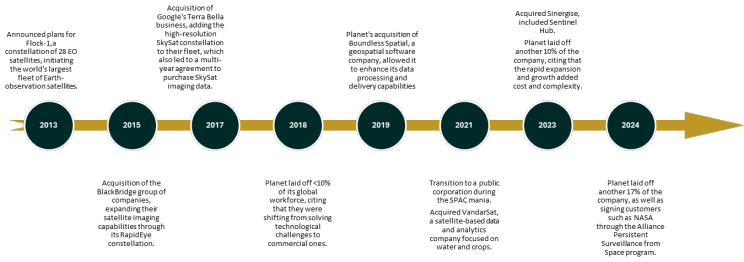
At NebuLink, we view these milestones not just as operational achievements, but as defining strategic decisions that shaped Planet Labs’ competitive positioning. These movements allowed Planet Labs to diversify its product offerings, enhance its data analytics capabilities, and expand its global footprint.
The Profitability Hurdle: Despite these foundational successes, Planet Labs is still not yet profitable and continues to implement strategic layoffs to manage operating costs and streamline expenditures.
By considering these milestones, NebuLink provides valuable insights into how strategic acquisitions and organizational shifts can serve as growth levers for companies in the space technology sector. This understanding is crucial for any business looking to emulate Planet Labs’ success or compete in the same space.
Key Industry Applications
This section explores the profound significance of Planet Labs within key industries such as agriculture, environmental monitoring, and disaster response.
1. Precision Agriculture
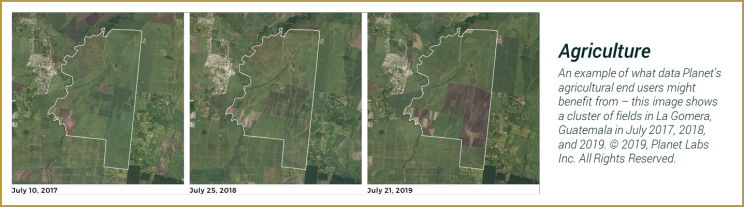
Planet Labs’ satellite imagery has revolutionized agriculture by providing farmers with near real-time data that enables precision farming practices. This data allows for monitoring crop health, optimizing irrigation, and managing resources more effectively. For instance, Planet Labs’ collaboration with agriculture technology companies has enabled farmers to integrate satellite data into their field management systems, leading to significant improvements in crop yields and resource efficiency.
Case Study: Precision Agriculture with Planet Labs and Farmers Edge
Farmers Edge has partnered with Planet Labs to revolutionize digital agronomy by integrating high-resolution, near-real-time satellite imagery into their precision agriculture services. This collaboration has empowered farmers with timely and accurate data, enabling them to make informed decisions that significantly enhance crop yields and optimize resource use. By leveraging Planet’s extensive satellite network, Farmers Edge has improved its ability to monitor crops, respond quickly to stress factors, and implement sustainable farming practices, leading to measurable improvements in both productivity and environmental impact. Read more about this partnership here.
2. Environmental Monitoring
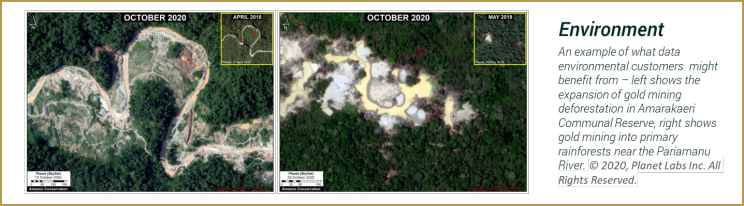
Planet Labs plays a crucial role in monitoring environmental changes, such as deforestation, glacier retreat, and wetland degradation. Their daily global imagery is instrumental for organizations like Global Forest Watch and the United Nations, which rely on this data to monitor and address environmental challenges. The company’s ability to provide consistent, high-resolution images over time allows for the detection of even subtle changes in the environment, enabling timely interventions.
Case Study: Deforestation Monitoring in the Amazon
Planet Labs has been instrumental in providing satellite imagery to monitor deforestation in the Amazon rainforest. Their data has been used by Global Forest Watch and other organizations to track illegal logging and other environmental threats. For more information, you can refer to the Global Forest Watch website and its accompanying reports.
3. Disaster Response
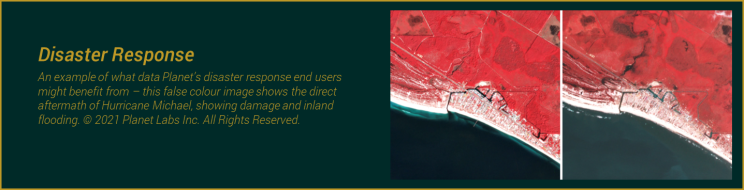
In disaster response, Planet Labs has proven to be an invaluable resource. Their rapid imaging capabilities allow for real-time assessment of disaster-stricken areas, aiding in efficient coordination of rescue and recovery efforts. For example, during the 2020 Australian bushfires, Planet Labs provided critical imagery that was used to track the spread of fires, assess damage, and plan evacuation routes.
Case Study: Hurricane Harvey Response
During Hurricane Harvey, Planet Labs’ satellites provided crucial imagery that helped FEMA and local authorities in disaster response efforts. This imagery was used to assess the extent of the flooding and plan rescue operations. For more information, check out this NASA article.
Technical Infrastructure & Analytics Architecture
Planet Labs stands out in the Earth Observation industry not just for the scale of its satellite fleet but also for its pioneering work in agile aerospace and data analytics. The company’s approach to satellite design and deployment—characterized by rapid iteration and innovation—has allowed it to maintain the largest Earth observation fleet in history, consisting of approximately 200 satellites.
Satellite Design
The company’s technological advancements are reflected in its continuous development and launch of new satellite models, such as the SuperDove satellites, which provide higher resolution and more spectral bands than earlier models. Additionally, their SkySat constellation offers the highest commercially available intraday revisit capabilities, capturing imagery of a specific location up to ten times per day.

AI and Data Analytics
Planet Labs also excels in data analytics, where it combines satellite imagery with AI and machine learning to generate actionable insights. This approach allows users to detect changes, monitor trends, and predict future outcomes more effectively than traditional methods.
Their use of AI in the Planet Analytic Feeds product, which automates land classification and change detection, has been particularly effective in sectors like urban planning, intelligence, and resource management. These analytics have helped clients make informed decisions faster, providing a significant competitive edge.

NebuLink’s Strategic Takeaway
At NebuLink, we view Planet Labs’ achievements as a foundational baseline for the rapidly evolving Earth Observation industry. Their strategic focus on integrating advanced tech with domain-specific downstream applications has positioned them as a leader in the market. This approach not only drives core aerospace innovation but also unlocks significant downstream market value across multi-disciplinary sectors.
For organizations looking to navigate the complexities of this industry, refine their positioning, or optimize financial performance metrics, understanding these structural market dynamics is essential. NebuLink’s strategic analysis aims to offer frameworks that apply to the broader space intelligence layer, where data-driven infrastructure underpins the next era of commercial decision-making.
Strategic Market Advisory
In the rapidly evolving landscape of space technology, having an objective understanding of market dynamics is crucial for sustainable operations. At NebuLink, our goal is to offer strategic insights that help businesses navigate complex ecosystems, manage capital-intensive frameworks, and optimize their positions for scalable growth.

As we’ve explored, Planet Labs exemplifies both the incredible commercial potential and the structural vulnerabilities within the Earth Observation market. Their innovative use of satellite technology has made significant strides in commercializing downstream services, but like many in the sector, they face a demanding timeline to achieve long-term profitability under heavy capital expenditure models.
Through this ongoing series, NebuLink will continue to dissect these operational intricacies, providing the analysis required to map trends, identify risks, and track the development of the commercial space intelligence sector.
Stay tuned for our next entry, where we will dive deep into the financial architecture of Planet Labs, analyzing revenue trajectories, operating expenses, and margins to better understand the path forward for macro-scale constellation operators.